
In aesthetic medicine, the most impactful changes are often the quietest ones. Rather than altering features, modern treatments focus on restoring balance—enhancing what already exists instead of creating something new. One area that perfectly reflects this shift is the jawline. When thoughtfully refined, Dermal fillers' jawline treatments don’t draw attention to themselves. Instead, they subtly reshape how the entire face is perceived.
At Smooth Aesthetics, conversations around facial rejuvenation often begin with structure rather than surface-level concerns. The jawline is not simply a contour—it is a foundational element that supports the lower face, influences symmetry, and frames expressions. For patients in Charlotte and Cornelius, NC, interest in jawline enhancement has grown not because of trends, but because of a desire for natural definition that aligns with professional, everyday life.
This article was updated in January 2026 to reflect current aesthetic techniques, patient priorities, and non-surgical treatment insights.
The jawline functions as the visual boundary between the face and the neck. When it is well-defined, it creates contrast that enhances cheek structure, supports the lower face, and contributes to a balanced profile. When definition softens—due to genetics, aging, or changes in bone density—the entire face can appear less structured.
Loss of jawline definition does not happen overnight. It often begins subtly, making it difficult to pinpoint why the face looks different over time. This is where Dermal fillers jawline treatments become part of an educational conversation rather than a cosmetic one. They address structure, not surface texture, and help reestablish proportion.
One of the most misunderstood aspects of jawline filler is the assumption that it adds bulk. In reality, effective jawline treatments focus on architectural support. The goal is not to make the jawline larger, sharper, or exaggerated—it is to reinforce clean transitions and restore lost definition.
When used strategically, Dermal fillers placed along the jawline act like scaffolding. They support soft tissue, define edges, and improve symmetry without changing facial identity. This architectural approach separates modern jawline treatments from older filler techniques that prioritized volume alone.
Unlike lips or cheeks, the jawline rarely needs to be “noticeable” to be effective. Its role is to support other features quietly. Many patients report that after jawline refinement, their face looks more balanced or refreshed, even though they cannot identify a single dramatic change.
This is why Dermal fillers jawline treatments appeal to individuals who want refinement without attention. The improvement often registers subconsciously to others, which aligns with the aesthetic preferences of patients throughout Charlotte and Cornelius, NC.
Jawline enhancement is not limited to one age group or gender. Patients who explore this option often include:
In many cases, jawline filler is recommended as part of a broader facial balancing plan using Dermal fillers, rather than as a standalone focus.
Facial features do not exist in isolation. Enhancing one area often affects how others appear. The jawline plays a particularly important role in this balance.
Supporting the jawline can:
When approached holistically, Dermal fillers allow injectors to guide the eye naturally across the face instead of drawing attention to one specific area.
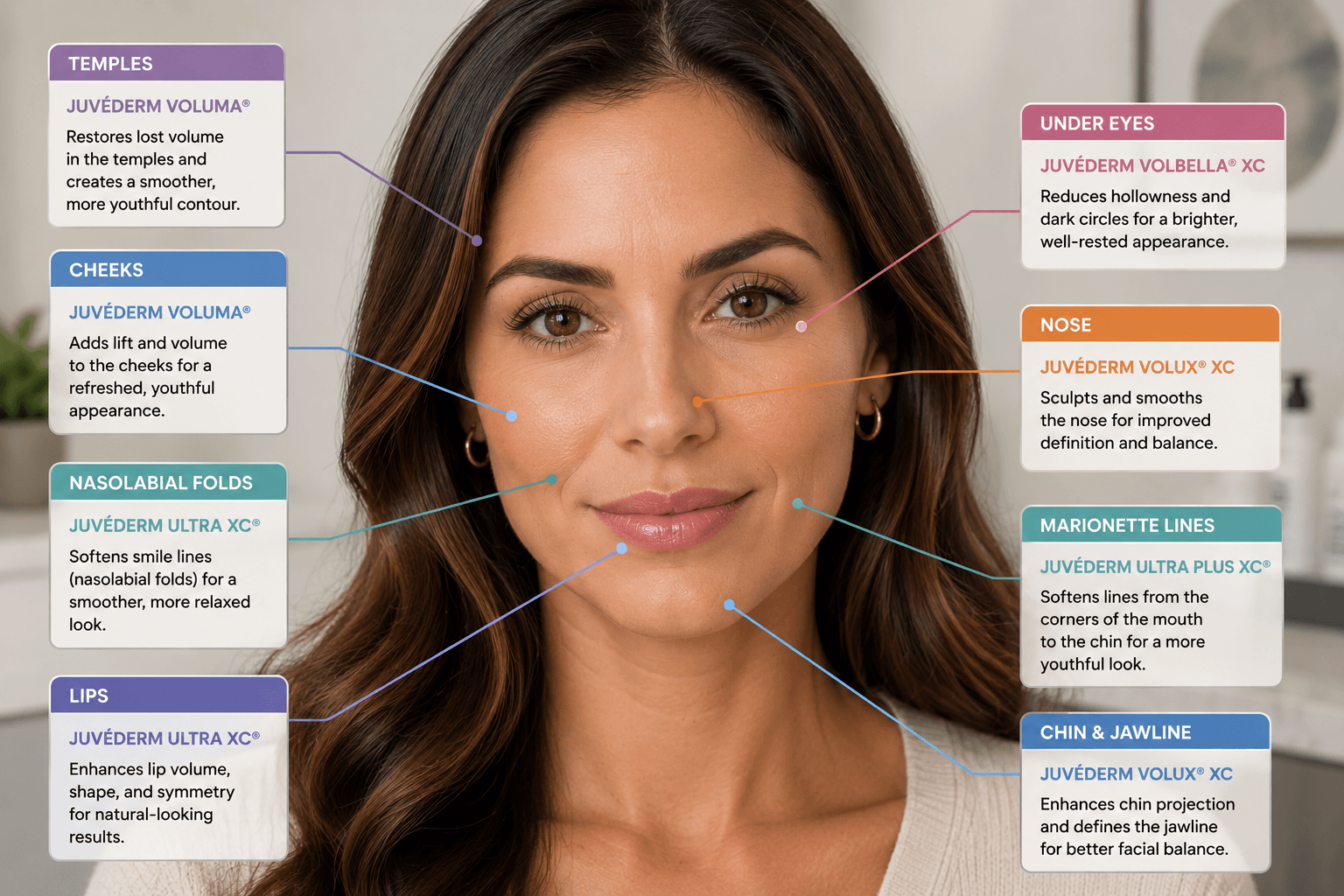
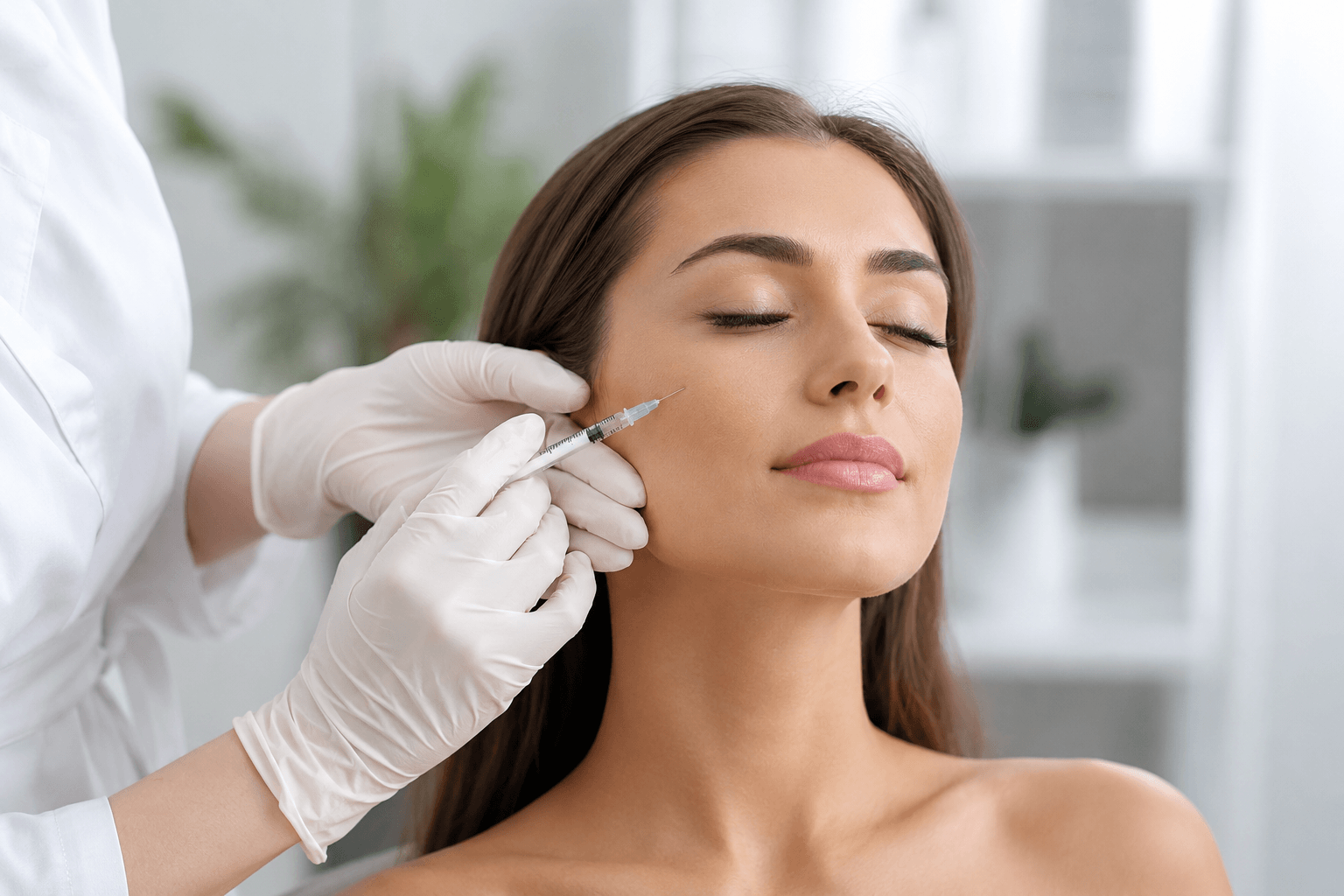
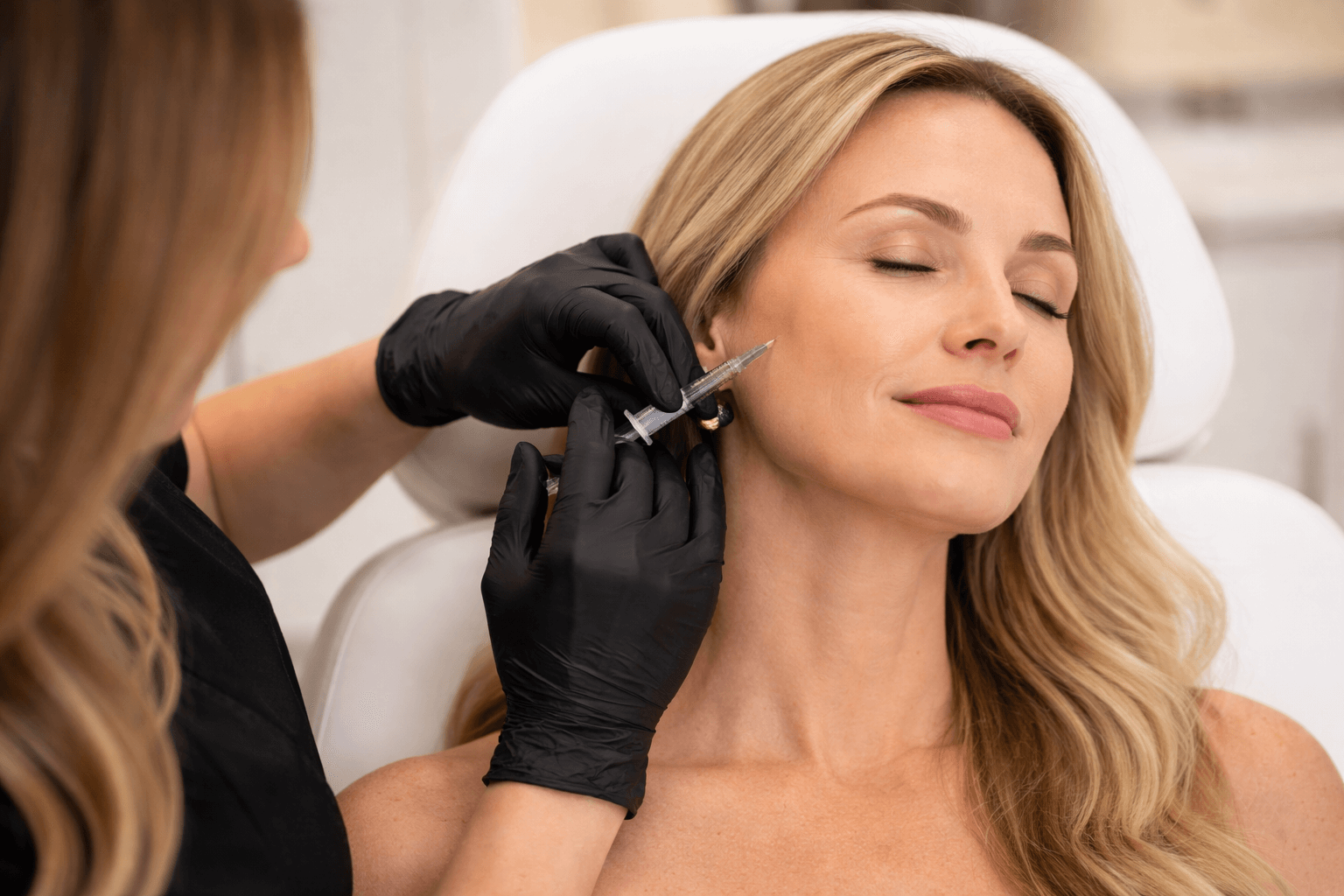
Jawline treatments require a different type of filler than softer areas like lips. Dermal fillers selected for jawline enhancement are typically firmer, with higher elasticity. This allows them to hold shape and provide structural support in an area subject to movement.
These fillers are placed deeper than superficial fillers and are designed to integrate smoothly with existing anatomy. Proper placement is essential, as overcorrection or incorrect depth can disrupt facial harmony rather than enhance it.
Patients often compare Dermal fillers jawline treatments with other non-surgical options, such as skin tightening or fat-dissolving injections. Each approach serves a different purpose.
In some cases, a combination approach may be recommended, depending on anatomy and goals.
One advantage of jawline filler is its longevity. Because the jawline is a structural area, results from Dermal fillers often last longer than treatments in high-movement areas like the lips.
Most patients can expect results to last between 12 and 18 months, depending on metabolism, product choice, and lifestyle factors. Maintenance treatments are typically conservative, focusing on preserving definition rather than repeating full correction.
At many medical aesthetics practices, jawline enhancement may not appear as a separate service on the menu. Instead, it is often incorporated into broader facial balancing or contouring treatments using Dermal fillers.
For patients researching Dermal fillers jawline options in Charlotte and Cornelius, NC, it is important to understand that suitability and availability are determined during consultation rather than through a fixed service listing. This approach ensures treatments remain individualized rather than trend-driven.
One of the most compelling aspects of jawline filler is its psychological impact. Patients often describe feeling more confident without feeling “treated.” This quiet improvement can influence how individuals carry themselves, how they photograph, and how they perceive their own facial balance.
Because Dermal fillers jawline treatments do not aim to change identity, they align with a more sustainable, confidence-based approach to aesthetics.
Dermal fillers jawline treatments focus on improving facial balance, reinforcing natural contours, and restoring definition rather than adding visible volume.
Yes. Dermal fillers used for the jawline are typically firmer and designed for structural support rather than softness.
When placed correctly, Dermal fillers' jawline enhancements appear subtle and natural, enhancing existing anatomy rather than altering it.
Results from Dermal fillers in the jawline often last 12–18 months, depending on individual factors and product selection.
No. Dermal fillers and jawline treatments benefit both younger patients seeking structure and older patients addressing age-related softening.
Yes. Dermal fillers are frequently used across multiple areas to create cohesive, balanced results rather than isolated changes.
Jawline refinement is no longer about chasing sharp angles or dramatic changes. The modern approach to Dermal fillers jawline treatments prioritizes balance, proportion, and subtle confidence. By viewing the jawline as a foundational element rather than a focal point, patients can achieve results that feel natural, intentional, and timeless.
For individuals in Charlotte and Cornelius, NC, jawline filler represents a thoughtful evolution in non-surgical aesthetics—one that enhances facial harmony without compromising individuality.

















.png)
.png)

































.png)



.png)


.png)

.png)
.png)
.png)





.png)


